

Tariffs, Trade War and the Impact on Medicine Production
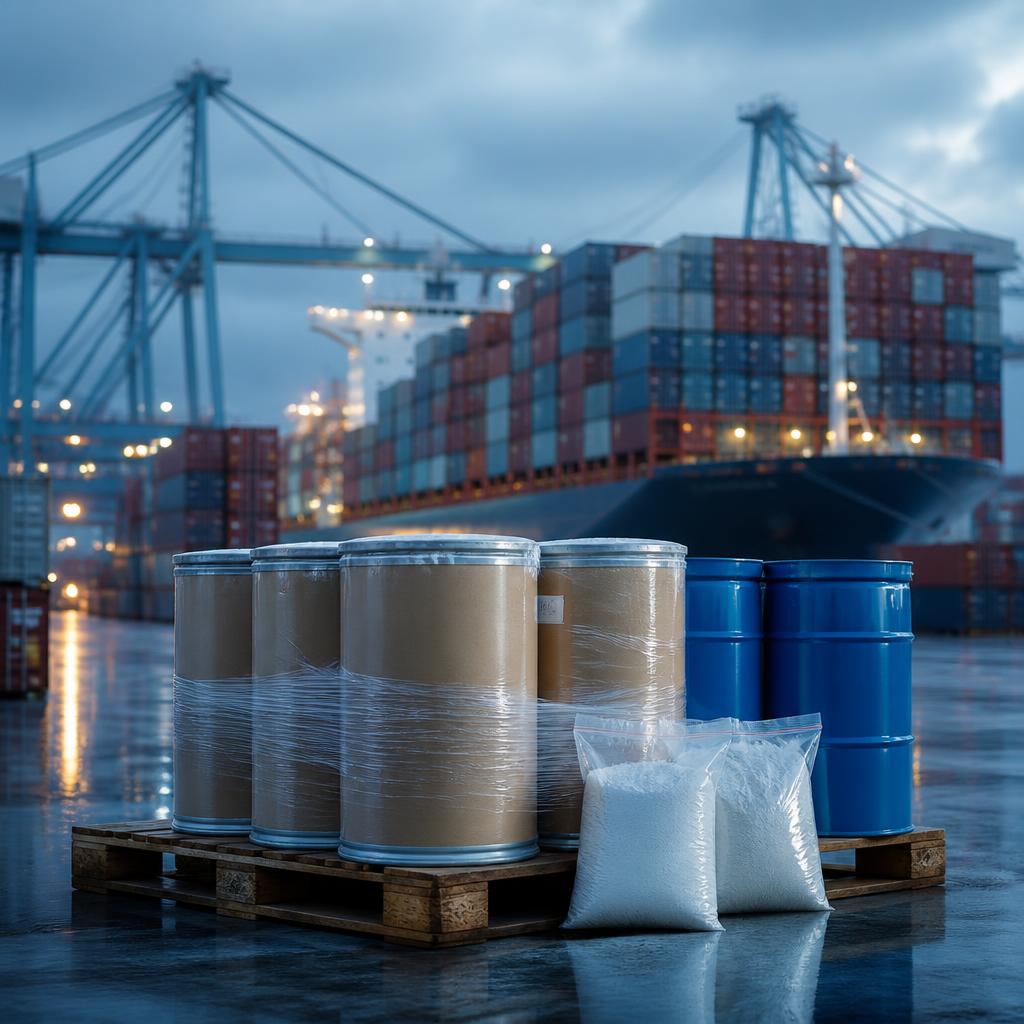
The escalation of trade disputes between major economies has once again brought attention to an issue that goes far beyond economics: the security of global supply chains. The pharmaceutical sector is particularly exposed, since raw materials, active pharmaceutical ingredients (APIs), laboratory instrumentation and manufacturing processes all depend on a complex international network of suppliers. Any disruption in that network can have material consequences for medicine production.
Although discussions around import tariffs usually focus on macroeconomic indicators, their effects reach directly into an industry that operates under strict technical and regulatory standards. Unlike other segments, pharmaceutical manufacturing requires stability, traceability and predictability at every stage of the chain. This concern becomes even more relevant given the high global concentration of input production: data reported by the press indicates that China accounted for 73.7% of the active pharmaceutical ingredients imported by India between 2024 and 2025 — clear evidence of how dependent the world remains on a small number of producing markets.
A Highly Integrated Chain
In practice, trade conflicts and new tariffs can affect raw material suppliers, manufacturers of analytical equipment, quality control laboratories and logistics operators alike. This is a tightly integrated chain, where a localised restriction can produce ripple effects across several production stages.
Reindustrialisation Is Not Immediate
In recent years, several governments have advocated reindustrialisation policies to reduce external dependence in strategic sectors. When it comes to the pharmaceutical industry, however, expanding local production is not a decision that can be implemented quickly. Transferring the manufacturing of a medicine to another country, or replacing a supplier, involves technical validations, equipment qualification, comparability studies, regulatory adjustments and new certifications. For more complex products, these steps can take months — or even years — to complete.
The Hidden Cost: Operational Planning
Another frequently overlooked aspect is the impact on operational planning. The pharmaceutical industry works with long production cycles, strategic inventories and rigorous regulatory requirements. Unexpected changes in international trade force companies to revise contracts, redefine sourcing strategies, reassess suppliers and recalculate stock levels — increasing operating costs and reducing predictability.
Quality Control Cannot Be Accelerated
Quality control is also directly affected, because replacing a supplier is far more than a commercial negotiation. Every new raw material must undergo physicochemical, microbiological and performance analyses, in addition to risk assessments, equivalence testing and formal qualification processes, ensuring that the medicine maintains exactly the same standards of safety, efficacy and quality. This is essentially scientific and regulatory work — and it cannot be accelerated simply because the market demands it.
Building Resilient Supply Chains
More than reacting to crises, the priority must be to build more resilient production chains. Investments in risk management, supplier diversification, traceability, operational intelligence and strategic planning should be treated as indispensable to the sustainability of the pharmaceutical sector. In other words, the ability to anticipate disruption may be as important as the ability to manufacture medicines. It is this preparation that will allow the industry to protect what must never be put at risk: the safety and continuity of patient care.
By Eduardo Rocha Bravim, specialist in pharmaceutical biotechnology, analytical instrumentation, quality control and scientific supply chain, with international experience. This is an English adaptation of an article originally published by an independent industry publication.