
After Patent Expiry, the Real Race for Semaglutide Begins
Anvisa has approved six synthetic semaglutide pens; the next dispute will be over the ability to produce at scale, control quality and secure a reliable supply chain.
Translated from the original Portuguese article published by Guaíra News on 14 August 2026. The English version below may differ slightly from the original reporting; please refer to the source for the verbatim text.
The expiry of the semaglutide patent on 20 March 2026 opened a new dispute in the pharmaceutical industry. With exclusivity ending for the active ingredient used in medicines such as Ozempic and Wegovy, several laboratories are now moving to introduce their own versions and expand access across the Americas.
In the same month, Anvisa reported that eight semaglutide registration processes were under review and another nine were awaiting the start of technical assessment. Most applications had been filed in 2025, although the first request reached the agency as early as 2023.
The scenario advanced quickly. In May, Anvisa granted EMS the registration of Ozivy, the first synthetic-route semaglutide pen approved in the country after patent expiry. On 29 July, five further synthetic versions were registered: Owozy, Seemasun, Zempneo, Semavy and Orsema.
The market therefore reached six Anvisa-approved synthetic semaglutide medicines in a matter of months. This shift signals that competition has entered a second stage: beyond obtaining marketing authorisation, companies must demonstrate the ability to convert regulatory approval into consistent and competitive production.
The Test Now Happens Inside the Plant
According to Eduardo Rocha Bravim, a specialist in pharmaceutical biotechnology, analytical instrumentation, quality control and scientific supply chain with international experience, manufacturing peptide-based medicines imposes challenges that differ from those found in the simpler molecules of the traditional pharmaceutical industry.
“Regulatory approval is a decisive milestone, but it does not end the challenge. With molecules of this complexity, the discussion moves to production capacity, process control, raw material qualification, robust analytical methods and batch-to-batch consistency. Scaling production while maintaining the quality standard is a fundamental part of this race.”
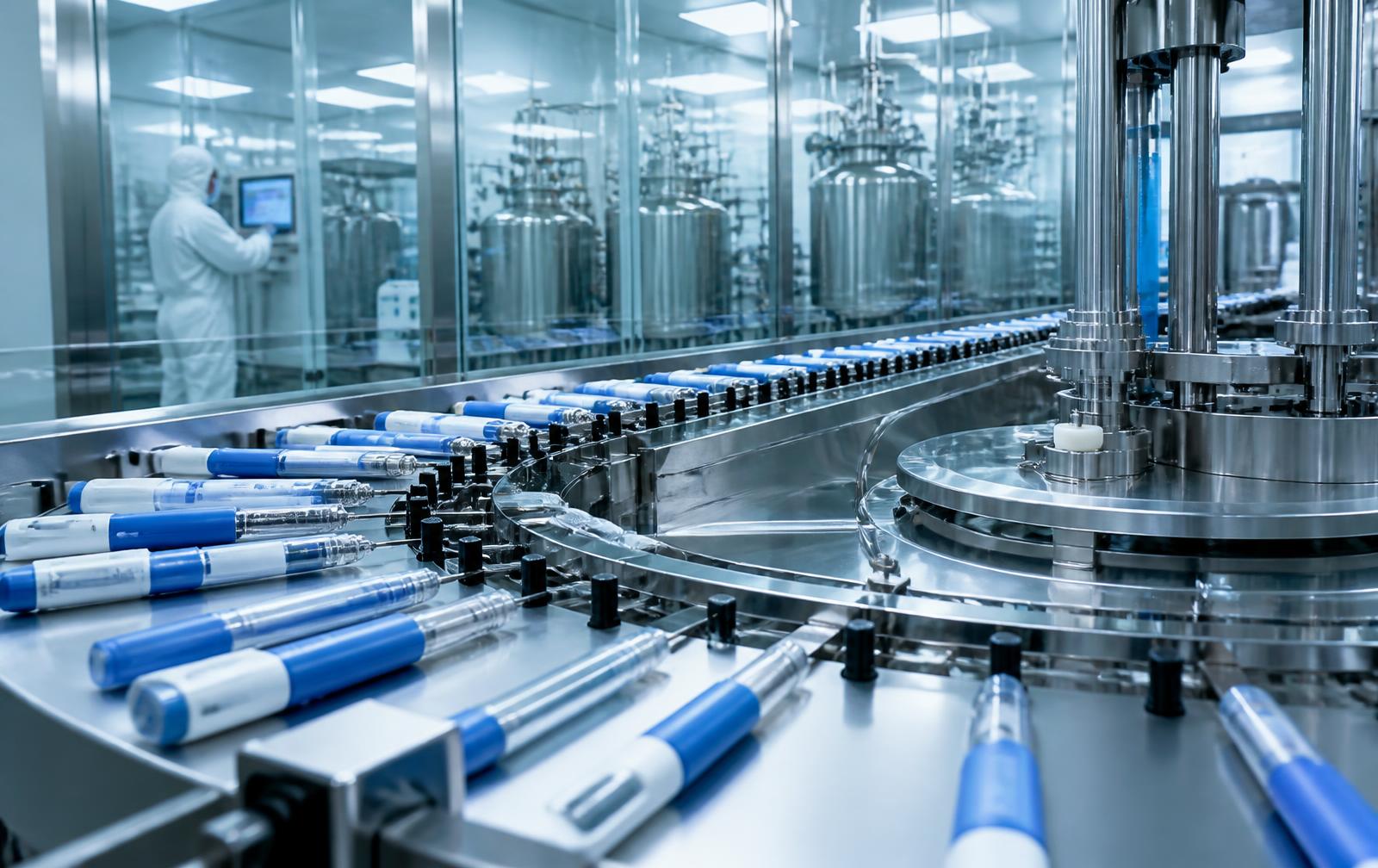
EMS, for example, has invested more than BRL 1.2 billion over ten years in science, technological development and infrastructure related to its peptide platform. Its production facility has an initial capacity of up to 20 million pens per year.
More than volume, however, Bravim draws attention to an aspect that is less visible to the consumer: the control infrastructure required to guarantee that millions of units present the same quality parameters.
“It is not enough simply to produce the molecule. It must be characterised, impurities must be controlled, critical process parameters must be monitored and repeatability must be demonstrated. The larger the scale, the greater the need for analytical systems capable of detecting deviations before they become quality problems.”
Supply Chain May Define the Winners
Another challenge sits outside the production lines. More complex medicines depend on a supplier network able to deliver raw materials, reagents, packaging components and consumables within strict specifications. For Bravim, this may become one of the main bottlenecks in the expansion of semaglutide in the country.
“A supplier that cannot maintain consistent specifications can compromise the entire production plan. That is why supplier qualification, traceability, supply chain redundancy and inventory planning gain strategic weight.”
The pace of approvals shows the size of the sector's interest. According to Anvisa, of the 24 synthetic and biological medicines included in the prioritisation notice for semaglutide and liraglutide, 11 analyses had been concluded and six had been approved by the end of July.
Industrial Time Runs Differently
The movement may also broaden competition in a market that gained global relevance with the growth of treatments based on GLP-1 receptor agonists. For Bravim, however, the true winner of this race will not necessarily be the laboratory that obtains a registration first, but the one able to combine scale and quality over time.
“Commercially, the race has already started and moved very fast. Industrially, the clock works differently. Pharmaceutical manufacturing at scale requires infrastructure, qualified suppliers, instrumentation, validation and quality protocols that are not built overnight. The challenge now is to turn regulatory capability into sustainable industrial capability.”
Advanced Life Sciences supports pharmaceutical and biotechnology manufacturers with analytical instrumentation, HPLC/UHPLC and LC-MS spare parts, preventive maintenance kits and qualified supply chain solutions — the infrastructure behind consistent quality at industrial scale.