

The Laboratory of the Future Is Already Here: How AI and Robotics Are Reshaping the Pharmaceutical Industry
Automation, artificial intelligence, and technological integration are transforming how laboratories operate, develop analytical methods, and ensure the quality and reliability of their results.
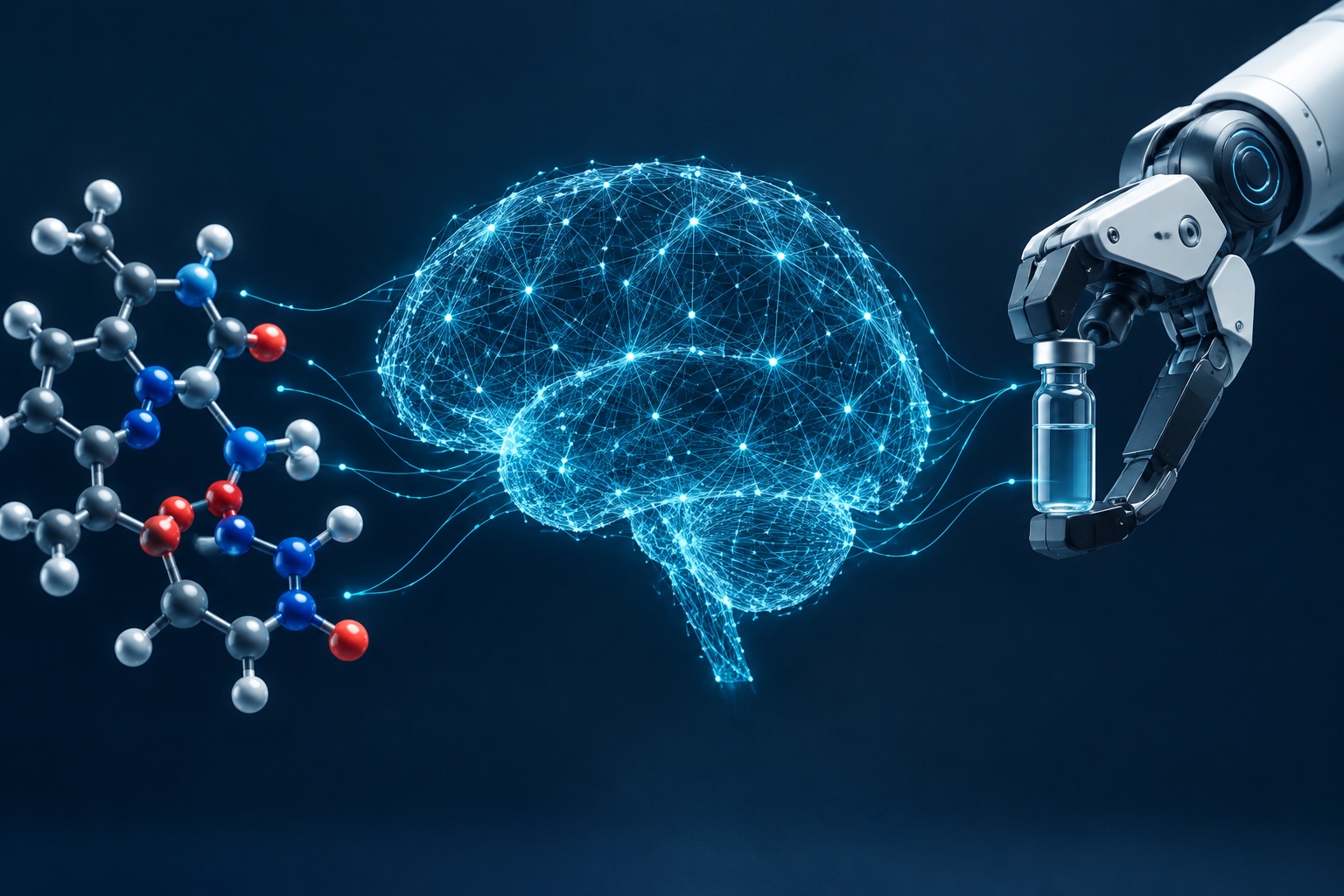
The pharmaceutical industry is entering a new era of technological transformation. For decades, laboratory innovation has been driven primarily by the development of increasingly precise, sensitive, and efficient analytical instruments. Today, however, a more profound shift is underway: the convergence of laboratory instrumentation, artificial intelligence, robotics, and digital technologies.
This transformation goes far beyond upgrading individual instruments. It represents a fundamental change in how laboratories organize their operations, manage scientific information, and make data-driven decisions.
At Advanced Life Sciences, we believe understanding this evolution is essential to identifying the technologies, opportunities, and strategic partnerships that will shape the next generation of scientific solutions.
A New Generation of Intelligent Laboratories
The concept of the smart laboratory is rapidly moving from a long-term vision toward practical implementation.
Automated systems already enable laboratories to perform repetitive tasks with greater consistency, while digital platforms increasingly connect different stages of analytical workflows.
The next stage of this evolution will involve deeper integration, allowing instruments and software not only to execute predefined tasks but also to support data interpretation, process optimization, and operational decision-making.
Within the pharmaceutical industry, these developments offer significant opportunities across research and development, quality control, and analytical development laboratories.
The integration of intelligent technologies has the potential to reduce manual intervention, strengthen traceability, improve equipment utilization, and enable scientists to focus on higher-value activities.
Ultimately, the objective is not simply to automate existing processes, but to create laboratory environments that are more connected, efficient, and responsive to scientific and operational demands.
Artificial Intelligence in Chromatographic Analysis
High-performance liquid chromatography (HPLC) and ultra-high-performance liquid chromatography (UHPLC) remain essential analytical technologies throughout the pharmaceutical industry.
However, the next major advances in chromatography may come not only from improvements in hardware, but also from the intelligent use of analytical and operational data.
Artificial intelligence is opening new possibilities for how chromatographic systems are developed, operated, and monitored.
Machine learning algorithms can support analytical method development and optimization, identify trends in complex datasets, recognize patterns associated with instrument performance, and assist scientists in interpreting analytical results.
Another promising application is predictive maintenance.
By analyzing operational data and identifying deviations from established performance patterns, intelligent monitoring systems may help laboratories anticipate certain maintenance requirements and reduce unexpected equipment downtime.
These capabilities do not eliminate the need for method validation, data integrity, or expert oversight. On the contrary, they reinforce the importance of responsible technology implementation in regulated laboratory environments.
The challenge is not simply to develop more intelligent systems, but to ensure that their outputs are scientifically reliable, traceable, and technically defensible.
Robotics and Automation: Driving Productivity and Consistency
Laboratory automation is undergoing a significant transformation.
Traditionally, automated systems have focused on specific activities, such as sample preparation, liquid handling, material transportation, and analytical sequence execution.
Advances in robotics, connectivity, and software integration are creating opportunities to connect these activities into more comprehensive workflows.
Robotic systems can help reduce variability in repetitive manual operations, increase sample-processing capacity, and allow highly trained professionals to dedicate more time to complex scientific activities.
The convergence of robotics, analytical instrumentation, and artificial intelligence is particularly relevant for pharmaceutical laboratories facing increasing demands for productivity, reliability, and operational efficiency.
Nevertheless, successful implementation requires careful planning.
System compatibility, operational safety, equipment qualification, computerized system validation, and data governance must remain central considerations.
The future of laboratory automation will depend not only on technological sophistication, but also on the ability to integrate these solutions into reliable and sustainable operations.
The Pharmaceutical Industry’s Challenge: Innovating Without Compromising Reliability
The pharmaceutical industry operates within one of the world’s most demanding environments for quality assurance, documentation, and regulatory compliance.
For this reason, implementing artificial intelligence and advanced automation requires considerations that extend far beyond operational efficiency.
Data integrity, traceability, risk management, change control, and computerized system validation are fundamental elements of responsible technology adoption.
Innovation must advance alongside scientific reliability.
Meaningful progress will occur when laboratories can incorporate intelligent technologies while maintaining the principles that underpin analytical quality and pharmaceutical product safety.
This balance between technological advancement and regulatory responsibility will be critical to the successful adoption of next-generation laboratory systems.
The Global Perspective: Innovation, Speed, and Competitiveness
The transformation of laboratory operations is taking place within an increasingly competitive international technology landscape.
Scientific instrument manufacturers, software developers, automation companies, and pharmaceutical organizations are expanding their investments in integrated solutions.
International industry events, including analytica China 2026, provide valuable opportunities to explore emerging technologies, engage with manufacturers, and strengthen collaboration across the scientific technology ecosystem.
Innovation is no longer defined by a single technology, company, or geographic region.
Increasingly, competitive advantage comes from the ability to combine scientific expertise, technological development, manufacturing capabilities, and effective execution.
In this environment, the speed at which new technologies can be developed, validated, manufactured, and brought to market is becoming an increasingly important strategic factor.
Organizations that successfully connect these capabilities will be better positioned to respond to evolving industry demands and emerging scientific challenges.
The Advanced Life Sciences Perspective
At Advanced Life Sciences, we believe the future of the life sciences industry will be shaped by the convergence of science, technology, and intelligence.
Our international presence and relationships with manufacturers, suppliers, and organizations across the industry allow us to closely follow developments in analytical instrumentation and laboratory technologies.
We recognize that the next generation of scientific progress will not be defined solely by the individual capabilities of analytical instruments, but by how effectively equipment, digital systems, and specialized professionals work together.
This perspective guides our interest in laboratory automation, software development, artificial intelligence, and emerging technologies for the pharmaceutical industry.
We see significant opportunities to contribute to an increasingly connected scientific ecosystem through technological collaboration, strategic partnerships, and the exploration of innovative solutions.
For us, innovation is not simply about adopting new technologies.
It is about understanding real industry challenges, recognizing opportunities, and helping develop solutions that deliver reliable, measurable, and sustainable results.
The Future Will Be Defined by Integration
The laboratory of the future will not be distinguished merely by the presence of robots, sophisticated algorithms, or advanced analytical instruments.
Its defining characteristic will be the ability to transform individual technologies into integrated, reliable, and intelligent operations.
Artificial intelligence can enhance analytical capabilities. Robotics can expand process automation. Digital integration can connect information previously isolated across different platforms and systems.
Yet the decisive factor will remain the human ability to translate technological capabilities into meaningful scientific progress.
The organizations that understand this relationship will be better positioned to lead the next phase of innovation in the life sciences industry.
The future of laboratory science will not be defined by instruments alone, but by the intelligence connecting them.