

The Global Pharmaceutical Industry: Key Markets and the Challenges of a New Era
Market size alone does not determine competitive strength. An executive view of the United States, China, Europe and Japan, India, Brazil and Vietnam, and the shared challenge of productivity, quality and intelligence.
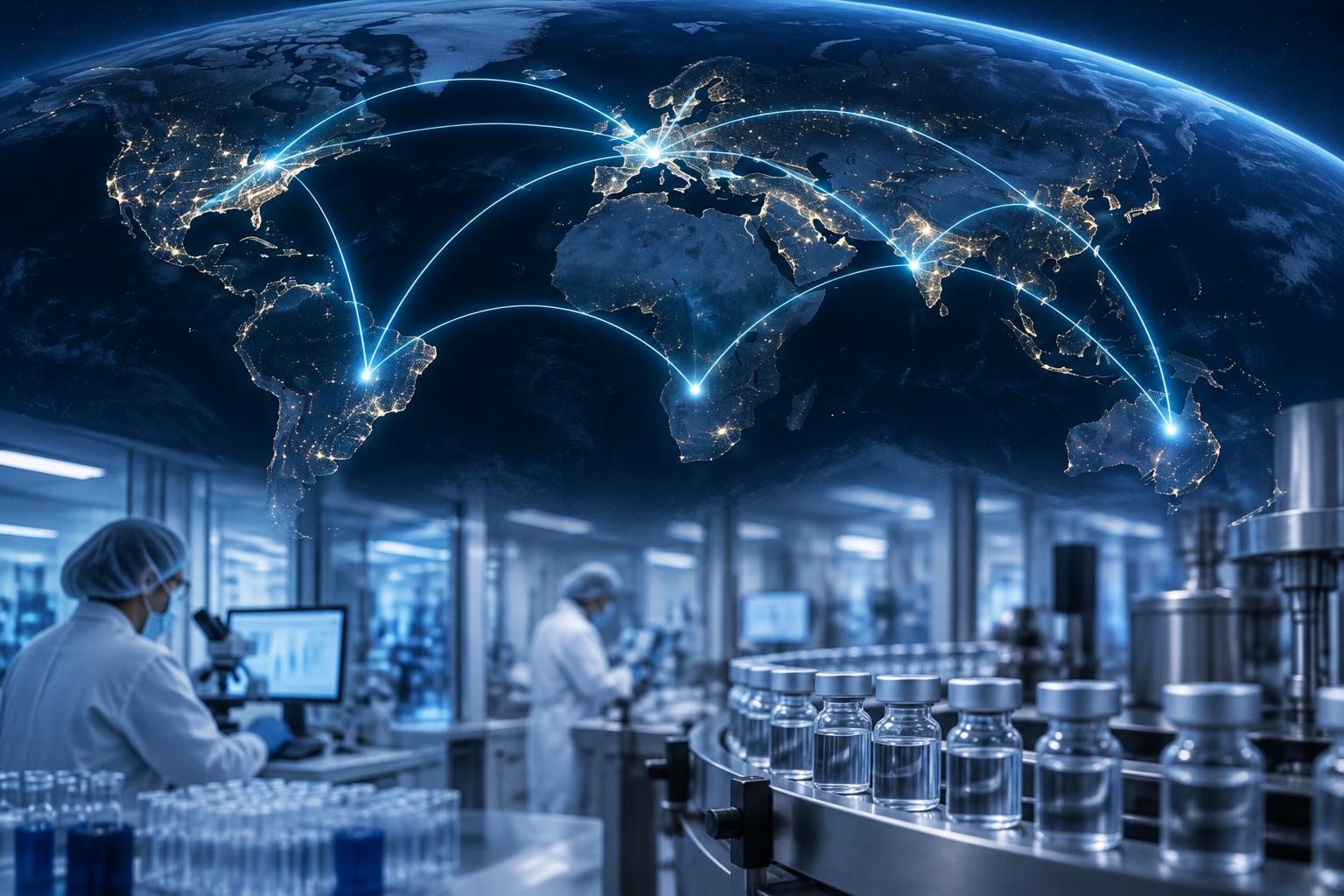
The global pharmaceutical industry is undergoing one of the most significant transformations in its history. Growing demand for medicines, advances in biotechnology, artificial intelligence, and the restructuring of international supply chains are redefining competitiveness across the sector.
However, understanding this industry requires looking beyond market size and revenue figures. There is a fundamental distinction between countries that consume pharmaceuticals, those that lead scientific research, and those with the industrial capabilities to manufacture and distribute medicines on a global scale.
This distinction helps explain the different strategies being pursued by the world’s leading pharmaceutical economies.
United States: Leadership in Innovation and Investment
The United States remains the world’s largest pharmaceutical market by value, accounting for approximately 45% of global prescription pharmaceutical sales, according to international industry estimates for 2024.
The country is home to many of the world’s leading pharmaceutical and biotechnology companies, supported by a sophisticated ecosystem of research institutions, universities, venture capital, and innovation centers.
Its primary challenge is balancing the substantial investment required to develop new therapies with growing pressure to reduce drug prices and expand patient access.
American competitiveness will also depend on its ability to maintain scientific leadership as international technological competition intensifies.
China: Industrial Scale and Technological Development
China has established itself as one of the world’s largest pharmaceutical markets while expanding its capabilities in biotechnology, clinical research, pharmaceutical manufacturing, and scientific instrumentation.
Industrial and technological centers such as Shanghai demonstrate the importance of integrating scientific research, manufacturing capacity, infrastructure, and long-term investment.
China’s ability to translate technological development into industrial production represents one of its most significant competitive advantages.
Nevertheless, the country faces challenges involving quality standards, intellectual property protection, international competition, and the continued development of higher-value pharmaceutical products.
Europe and Japan: Scientific Excellence Under Competitive Pressure
Germany, France, the United Kingdom, Switzerland, and Japan continue to play strategic roles in the international pharmaceutical industry.
These economies have strong traditions in scientific research, engineering, biotechnology, innovative medicines, and analytical instrumentation.
Europe, however, faces increasing competition for international research and development investment. Aging populations, healthcare budget constraints, and regulatory processes also influence the industry’s development.
In Japan, demographic changes and the need to improve productivity are accelerating interest in automation, digital transformation, and advanced healthcare technologies.
The central challenge for these established markets will be preserving their scientific leadership and industrial competitiveness as emerging technological centers expand.
India: The Strength of Pharmaceutical Manufacturing
India represents a distinct industrial model.
Internationally recognized for its generic pharmaceutical production, the country ranks third globally by pharmaceutical production volume and plays a critical role in supplying affordable medicines worldwide.
Indian pharmaceutical exports reached approximately US$30.5 billion during fiscal year 2024–2025, highlighting the international importance of its manufacturing infrastructure.
The next stage of India’s pharmaceutical development is expected to involve greater investment in biotechnology, biosimilars, research, and more complex pharmaceutical products.
Its challenges include dependence on certain imported raw materials, compliance with international regulatory requirements, and the need to strengthen innovation while maintaining cost competitiveness.
Brazil: Regional Leadership and Industrial Opportunities
Brazil is Latin America’s largest pharmaceutical market, supported by an important industrial base comprising domestic manufacturers, multinational companies, and research institutions.
Its substantial consumer market, growing generic medicines segment, and increasing demand for specialized treatments create significant opportunities.
However, the country continues to face structural challenges, including dependence on imported pharmaceutical inputs, tax complexity, high financing costs, and the need for sustained investment in research and laboratory infrastructure.
Expanding Brazil’s industrial capabilities requires more than isolated incentives. It demands an environment that encourages long-term investment, technical education, innovation, and the development of domestic suppliers.
Brazil has market potential, scientific expertise, and entrepreneurial capacity. The challenge is translating these strengths into greater technological and manufacturing competitiveness.
Vietnam: An Emerging Pharmaceutical Market
Vietnam represents an interesting example of an emerging pharmaceutical economy.
Although its pharmaceutical industry remains relatively small compared with the world’s major markets, the country has been implementing policies aimed at modernizing manufacturing facilities, improving quality standards, and strengthening domestic production.
Its pharmaceutical development strategy through 2030 emphasizes research, technology transfer, and increased domestic production of pharmaceutical raw materials.
Vietnam’s principal challenge will be reducing external dependencies, developing technological capabilities, and securing a stronger position within international pharmaceutical supply chains.
The Shared Challenge: Greater Productivity, Quality, and Intelligence
Despite their differences, these markets face a common challenge: increasing productivity without compromising quality, safety, or regulatory compliance.
In this environment, technological transformation is no longer a distant possibility.
Artificial intelligence, laboratory automation, advanced data analytics, and digital quality management systems offer opportunities to improve operational efficiency throughout the pharmaceutical industry.
More integrated analytical laboratories, traceable processes, data-driven maintenance, and intelligent management platforms are likely to become increasingly important sources of industrial competitiveness.
However, implementing these technologies requires appropriate validation, data governance, information security, and qualified professionals.
Technology alone cannot solve structural problems. Its value depends on an organization’s ability to integrate innovation into operational processes and turn information into reliable decisions.
Final Perspective: The Future Will Be Defined by the Ability to Execute
Examining the world’s leading pharmaceutical markets reveals an important conclusion: market size alone does not determine a country’s competitive strength.
The United States demonstrates the power of innovation and access to capital. China highlights the value of industrial integration. India illustrates the importance of manufacturing scale. Europe and Japan maintain essential scientific and technological capabilities. Brazil and Vietnam present industrial development opportunities, each with its own characteristics and challenges.
The next chapter of the pharmaceutical industry will be shaped by the integration of science, automation, artificial intelligence, and advanced manufacturing.
In my view, future competitiveness will not be determined solely by who develops new technologies, but by who can transform those technologies into reliable, accessible, and practical solutions for the industry.
The real challenge is not simply keeping pace with this transformation. It is developing the capabilities, infrastructure, and strategic vision required to become an active participant in shaping it.