

Beyond Innovation: Advanced Life Sciences Strengthens Its Technology Strategy at analytica China 2026
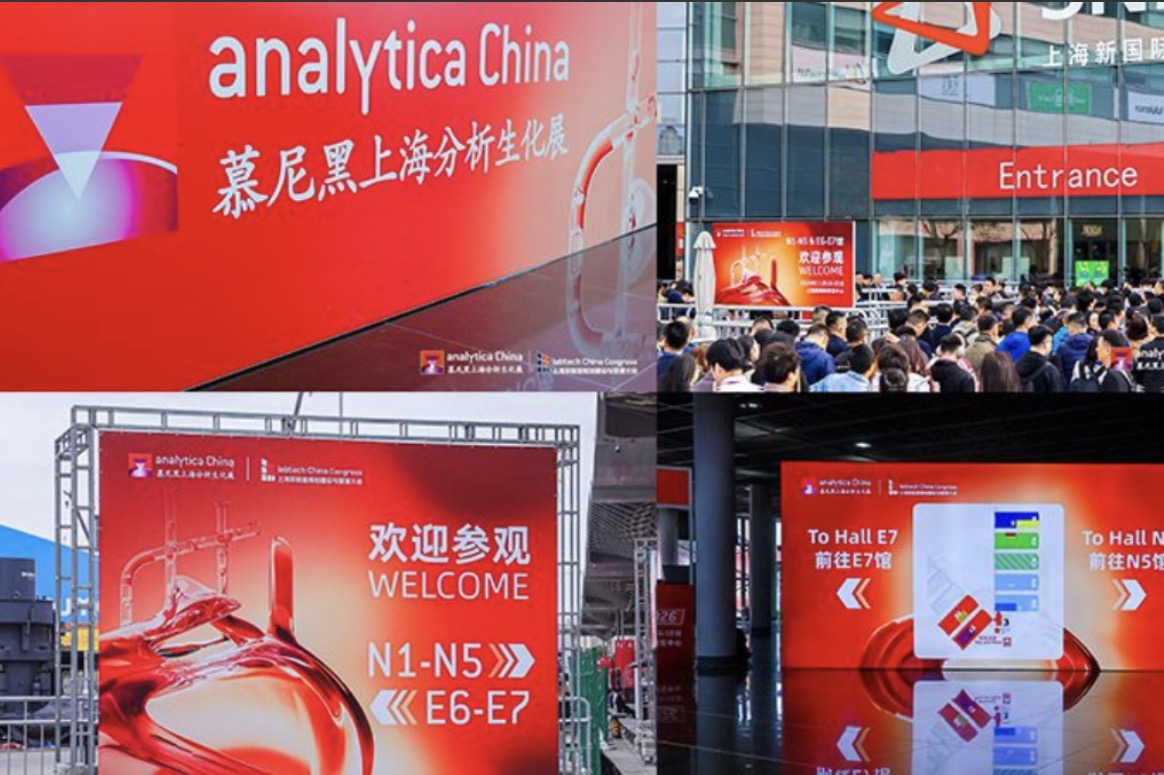
Ahead of analytica China 2026 in Shanghai, the Advanced Life Sciences communications team spoke with Eduardo Bravim, CEO of the Group, about its strategic priorities at the exhibition, expanding investments in laboratory automation, artificial intelligence, proprietary software, and opportunities to develop analytical equipment under the Advanced Life Sciences brand.
Eduardo Bravim · CEO of the Group
Is this Advanced Life Sciences’ first participation in analytica China?
Eduardo Bravim: No, this will be our second participation. analytica China is an important event in our international strategy, bringing together manufacturers, technology developers, and companies shaping the future of laboratory sciences.
We see this exhibition as more than an opportunity to explore the market. It is a strategic environment where we can identify emerging technologies, strengthen relationships, and establish the foundations for future projects.
What is the primary objective of Advanced Life Sciences at analytica China 2026?
Eduardo Bravim: Our primary objective is to accelerate our technology strategy by identifying innovative solutions, establishing strategic partnerships, and exploring new opportunities for technological development.
We are particularly focused on laboratory automation, artificial intelligence for pharmaceutical applications, advanced software platforms, digital integration, and analytical instrumentation.
Another important priority is identifying manufacturing partners with the technical expertise and production capabilities required to support the future development of laboratory equipment under our own brand.
We believe the future of the laboratory industry will be defined by companies capable of integrating hardware, software, automation, and intelligent technologies into comprehensive solutions.
Our presence in Shanghai reflects our determination to actively participate in that transformation.
Laboratory automation is one of the exhibition’s major themes. What opportunities is the Group exploring?
Eduardo Bravim: Laboratory automation is a strategic priority for us.
We are interested in technologies that connect analytical instruments, automate repetitive procedures, improve sample handling, and enable more efficient laboratory workflows.
Our focus includes robotic systems, automated sample preparation, instrument connectivity, and intelligent laboratory management solutions.
We see significant potential in bringing these technologies together to support the next generation of pharmaceutical and analytical laboratories.
Artificial intelligence has become a central topic across the industry. How is Advanced Life Sciences approaching this technology?
Eduardo Bravim: We see artificial intelligence as a fundamental component of the future laboratory ecosystem.
Our interest goes beyond conventional AI applications. We are exploring how intelligent systems can support pharmaceutical quality processes, laboratory operations, data analysis, workflow optimization, and decision-making.
Through our technology initiatives, including Depth Stride Technologies, we are investing in the development of software and AI-driven solutions for the life sciences industry.
We believe the greatest value will come from combining artificial intelligence with real laboratory operations, analytical data, and regulatory requirements.
Is Advanced Life Sciences considering the development of equipment under its own brand?
Eduardo Bravim: Yes. This is an important area within our long-term strategic vision.
One of our priorities at analytica China is to identify qualified manufacturing and technology partners capable of supporting the development of analytical and laboratory equipment under the Advanced Life Sciences brand.
We are evaluating opportunities involving product design, technical specifications, manufacturing capabilities, quality assurance, and potential joint development projects.
Our objective is to explore a sustainable product development strategy based on technological reliability, competitive positioning, and international market requirements.
We believe this initiative could open an important new chapter for the Group.
What types of manufacturers are you looking to connect with during the exhibition?
Eduardo Bravim: We are particularly interested in manufacturers of analytical instruments, laboratory automation systems, sample preparation equipment, pharmaceutical laboratory technologies, and advanced electronic components.
We also want to connect with companies that have strong research and development capabilities and are open to long-term manufacturing or technology partnerships.
Our approach is selective. Beyond manufacturing capacity, we are looking for technical competence, consistent quality standards, and a shared commitment to innovation.
How important is software development within the Group’s future strategy?
Eduardo Bravim: Software development is one of the areas where we see the greatest long-term potential.
The laboratory industry is becoming increasingly data-driven, and the ability to connect instruments, systems, and processes will become essential.
We are investing in technology initiatives involving digital platforms, laboratory workflows, artificial intelligence, and solutions designed to improve operational efficiency and information management.
Our ambition is to develop technologies that can operate within an integrated laboratory ecosystem, connecting physical instrumentation with intelligent software solutions.
What technological trends are attracting your attention at analytica China this year?
Eduardo Bravim: We are closely following several developments, particularly intelligent automation, robotics, connected analytical instruments, advanced sensor technologies, and AI-assisted laboratory systems.
Another area of interest is the growing integration between laboratory equipment and digital platforms.
We believe that the convergence of these technologies will redefine laboratory productivity, data integrity, and analytical performance over the coming years.
Our goal is to identify which developments have the strongest potential for real-world industrial applications.
How could these technologies benefit pharmaceutical manufacturers?
Eduardo Bravim: Pharmaceutical manufacturers operate in environments where precision, reliability, traceability, and regulatory compliance are essential.
Automation and intelligent software can create significant opportunities to improve efficiency, reduce manual intervention, strengthen data management, and support quality processes.
We are particularly interested in technologies that can be applied to pharmaceutical quality control laboratories and analytical operations.
For us, technological innovation must ultimately deliver measurable operational value.
Does the Group see opportunities to combine analytical instruments with its own software technologies?
Eduardo Bravim: Absolutely. This is one of the most promising directions within our technology strategy.
The integration of analytical instruments with proprietary software, automation capabilities, and artificial intelligence could create substantial opportunities for differentiated solutions.
We are exploring how equipment connectivity, intelligent data processing, and digital workflow management can work together in a more integrated environment.
Our long-term vision is to participate in the development of solutions where instrumentation and software are designed to complement each other.
How does China contribute to the Group’s technology development ambitions?
Eduardo Bravim: China has become an important center for industrial manufacturing, engineering, and technological innovation.
The country offers access to a broad ecosystem of equipment manufacturers, component suppliers, automation specialists, and technology developers.
For Advanced Life Sciences, this creates valuable opportunities to explore manufacturing partnerships, collaborative development, and access to emerging technologies.
Our objective is to build long-term relationships that combine technical expertise, manufacturing capabilities, and international commercial opportunities.
How will you evaluate potential strategic partners during the exhibition?
Eduardo Bravim: Our evaluation goes beyond commercial conditions.
We place significant importance on engineering capabilities, manufacturing consistency, product reliability, technical documentation, quality management, and the capacity to support future product development.
For potential private-label or joint-development initiatives, we also consider intellectual property arrangements, product customization, long-term technical support, and alignment with international market requirements.
We want partnerships that can support sustainable growth and create genuine technological value.
What role will the Group’s international presence play in commercializing future technologies?
Eduardo Bravim: Our presence in Brazil, the United States, and the United Kingdom provides an important foundation for developing international business opportunities.
We see potential to leverage this structure to strengthen relationships with technology partners, understand regional market requirements, and support future commercialization strategies.
As our technology initiatives advance, international coordination will be essential to evaluating market opportunities and building scalable business models.
Our objective is to develop a Group with the capabilities to operate across different regions while maintaining a consistent commitment to quality and innovation.
Could analytica China 2026 influence Advanced Life Sciences’ investment priorities for 2027?
Eduardo Bravim: Certainly. One of the reasons we participate in events of this importance is to evaluate technologies and opportunities that may influence our strategic decisions.
We are entering a period in which investments in software, artificial intelligence, automation, and technological development will become increasingly relevant to our long-term plans.
I believe 2027 has the potential to be a significant year for the Group, particularly as we advance our technology initiatives and explore new partnerships.
Our ambitions are substantial, but every investment must be supported by technical evaluation, market potential, and a clear business strategy.
What message would you like to share with the market as Advanced Life Sciences participates in analytica China 2026?
Eduardo Bravim: Advanced Life Sciences has a clear vision for the future.
We believe the next generation of laboratory technologies will emerge from the integration of analytical instrumentation, automation, software, and artificial intelligence.
Our participation in analytica China reflects our commitment to investing in these areas, developing international partnerships, and exploring opportunities to create new technologies and equipment solutions.
We are building our strategy with a long-term perspective, focused on technological capability, international collaboration, and sustainable growth.
Our ambition is not simply to participate in the future of laboratory technology, but to contribute to its development.
That is the direction we are pursuing, and analytica China 2026 represents another important step toward that vision.